Smart Tools for Strong Lives Conference
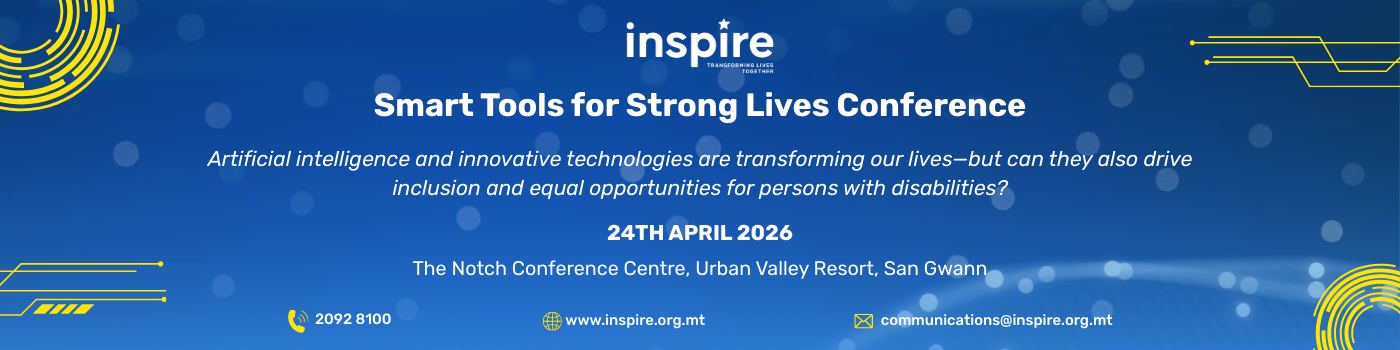
Artificial intelligence and innovative technologies are rapidly taking over every aspect of our lives. But can these inventions be a chance to increase inclusion and offer equal opportunities for persons with disabilities?
In this conference, we bring together users, professionals, researchers, and developers of assistive tools that are designed to help persons with disabilities. We want to discuss the future of assistive tools, how they can help people with disabilities lead more independent lives, and what problems and risks might be associated with them.

Jay Giddens
 Jay Giddens has over 30 years of experience in sales and has spent the past 18 years working in education technology, supporting schools, colleges, and universities with accessibility solutions. At ReadSpeaker, he has helped make text-to-speech technology more widely available to students who need support with reading.
Growing up with dyslexia in the 1970s and 80s, Jay Giddens experienced firsthand the challenges of being taught through traditional linear learning methods that did not work for everyone. This experience has shaped his passion for raising awareness of neurodiversity and promoting alternative ways of learning that allow more people to thrive. Through his speaking and podcast Thick No More, Jay Giddens shares his personal journey and advocates for better understanding and support for those who learn differently.
Horacio Saggion
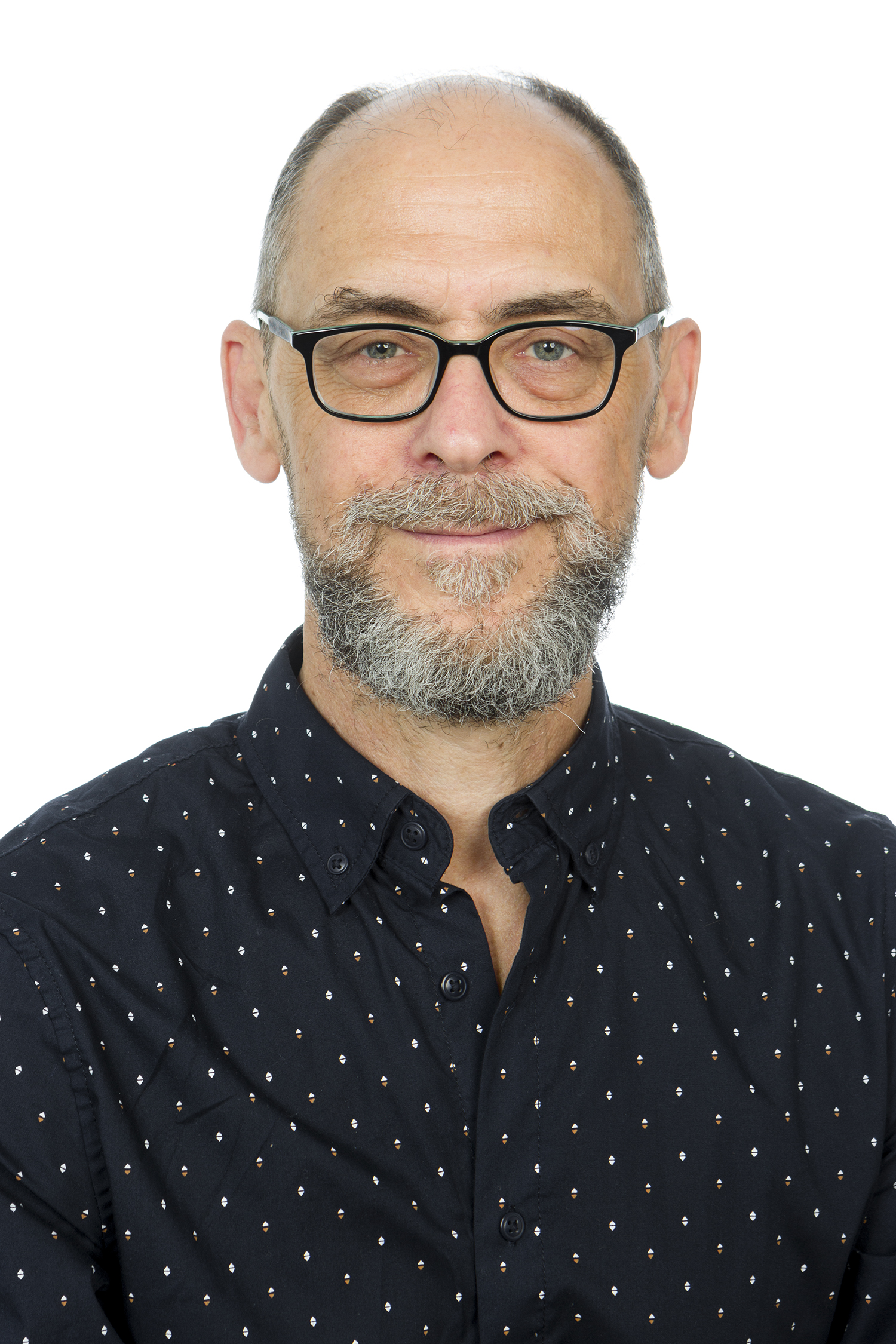
Horacio Saggion is chair in Computer Science and Artificial Intelligence at the Department of Information & Communication Technologies, Universitat Pompeu Fabra (UPF), Barcelona, Spain. He was appointed by UPF in 2010 as a Ramón y Cajal research fellow from the Spanish Ministry of Science and he was promoted to full professor in 2021. Horacio is director of the TALN Natural Language Processing Group where he works in several areas of Natural Language Processing (NLP) automatic text summarization, text simplification, NLP for Sign Languages, information extraction, figurative language, sentiment analysis and related topics. His work combines symbolic and statistical techniques. Since his arrival he has obtained funding to carry out his research from different national and international organizations Ministerio de Industria, Turismo y Comercio (Proyecto Simplext 2010-2013), Ministerio de Economía y Competitividad, and the European Commission (FP7, CIP, H2020, Horizon Europe). He also collaborates with the industry through contracts, projects and Doctoral PhDs. Horacio is the project coordinator of the Horizon Europe funded project iDEM – Innovative and Inclusive Democratic Spaces for Deliberation and Participation – and principal co-investigator in the AI-BOOST project and principal investigator of IDEAL inclusive Democratic Engagement and Language Technologies in Europe.
Prof. Richard Mills
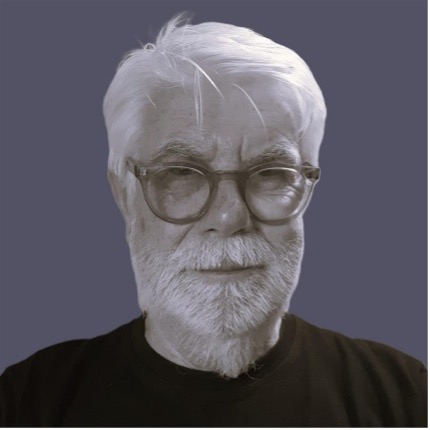 Dr Richard Mills is the Head of Research and Clinical Support and Associate Consultant, AT-Autism, London. He is also a Research Fellow in the dept of Psychology, University of Bath, and visiting Professor at Taisho University, Tokyo, Japan: Senior Research Fellow and visiting Scholar, Bond University, Queensland, Australia. Dr Richard Mills holds other positions as a Consultant, Autism Resource Centre (ARC) Singapore; Advisor: Government of Jersey CI: and as Research Associate, Centre for Practice Innovation, Scottish Autism and Consultant to the National Centre for Neurodiversity, Scotland. He also has a long association and strong connection with Malta. In the early 1990’s he became an adviser to the Eden Foundation, and in more recent years the Inspire Foundation, where he chairs the Research and Innovation Council. He is an Editor of ‘Autism the International Journal of Research and Practice’ Sage, and ‘Advances in Autism’ Emerald. He is a member of the Westminster Autism Commission and a trustee the John and Lorna Wing Foundation. For twenty-five years Richard was with the National Autistic Society, London, UK, as Director of Services, and later Director of Research, a joint appointment with Research Autism, London. His current research and practice interests are in programme and service evaluation, autism and mental health, forensic issues, in particular cybercrime, and in behaviours of concern- the Synergy programme. He is a lead on the SPELL framework programme in conjunction with the Tizard Centre at the University of Kent. He has authored numerous scientific articles.
Bryom
Bryom is an AI-powered productivity and wellbeing platform designed especially for neurodivergent individuals, including people with autism and ADHD. The platform helps users manage daily life, tasks, and emotional wellbeing through an adaptive AI assistant, gamified systems, and personalized tools. Bryom’s goal is to make everyday life more manageable and empowering by turning structure, support, and self-development into an engaging and accessible experience.
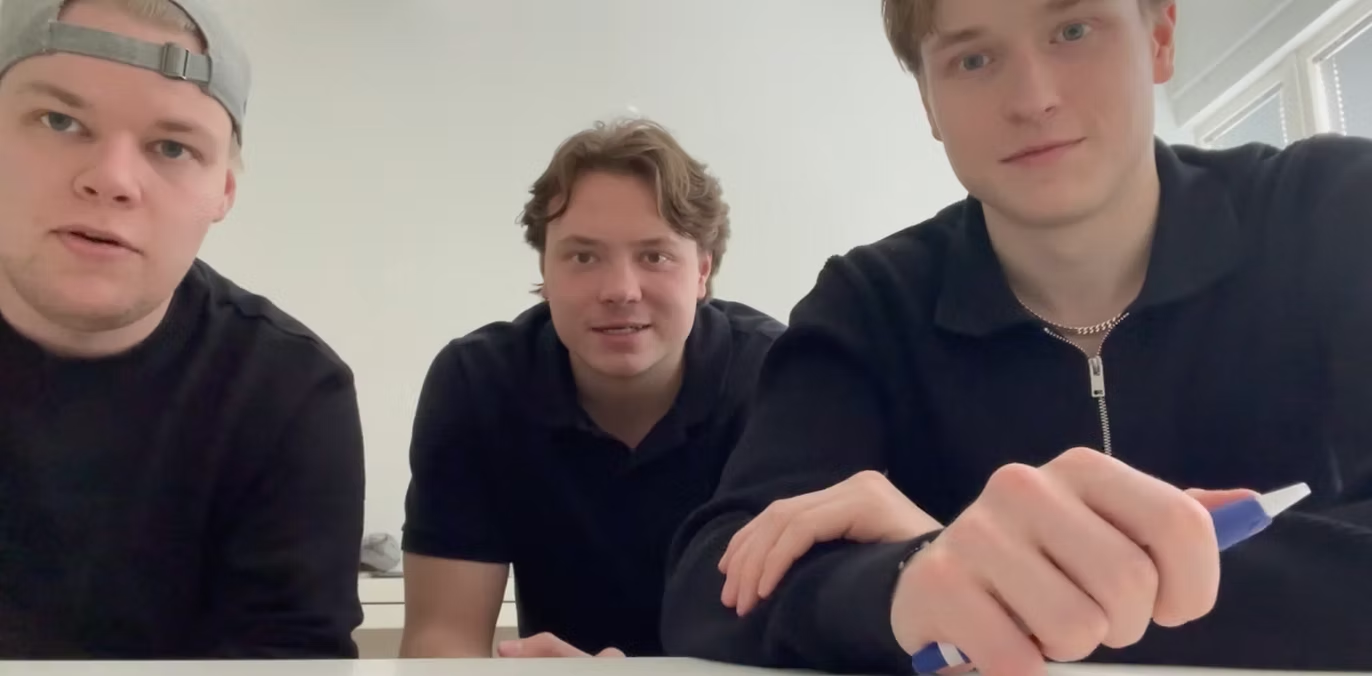
Alexander Snellman – Co-Founder
Alexander Snellman is a co-founder of Bryom and founder of Artificial Innovations Oy. He focuses on product vision, AI-driven innovation, and building technology that improves everyday life for neurodivergent individuals. Alexander is passionate about combining artificial intelligence, design, and psychology to create tools that help people manage tasks, reduce overwhelm, and unlock their potential.
Henrik Snellman – Co-Founder
Henrik Snellman is a co-founder of Bryom and works on strategic development and operations. He plays a key role in shaping the platform’s growth, partnerships, and long-term vision. Henrik focuses on building systems and partnerships that allow Bryom to scale internationally while staying aligned with its mission of supporting neurodivergent communities.
Jani Sundqvist – Co-Founder
Jani Sundqvist is a co-founder of Bryom and contributes to the technical development and architecture of the platform. He works on building the systems that power Bryom’s AI features and user experience. Jani is passionate about developing technology that provides practical support and meaningful improvements in everyday life.

|
Time |
Agenda |
| 08:00 – 09:00 | Welcome coffee and registration |
| 09:00 – 09:30 | Welcome addresses |
| 09:30 – 10:00 | Opening speech,
Prof. Dr. Richard Mills, AT-Autism London |
|
Inclusion in Your Pocket: Apps for Accessibility and Independence |
|
| 10:00 – 10:20 | iDEM app – breaking linguistic barriers for an inclusive democracy – presentation
Prof. Dr. Horacio Saggion, Universitat Pompeu Fabra |
| 10:20 – 10:30 | iDEM app – breaking linguistic barriers for an inclusive democracy – trial and discussion
Prof. Dr. Horacio Saggion, Universitat Pompeu Fabra, Spain |
| 10:30 – 10:50 | Bryom planner app for neurodivergent minds – presentation
Mr Alexander Snellman, Mr Henrik Snellman, Mr Jani Sundqvist, Bryom, Finland |
| 10:50 – 11:00 | Bryom planner app for neurodivergent minds – trial and discussion
Mr Alexander Snellman, Mr Henrik Snellman, Mr Jani Sundqvist, Bryom, Finland |
| 11:00 – 11:15 | Movement and discussion break |
| 11:15 – 11:35 | Stories Online For Autism (SOFA)
App – presentation Dr. Louis John Camilleri, Faculty of Education, University of Malta |
| 11:35 – 11:45 | Stories Online For Autism (SOFA)
App – trial and discussion Dr. Louis John Camilleri, Faculty of Education, University of Malta |
| Assistive Technology in Action: Stories from Users | |
| 11:45 – 12:15 | Panel discussion involving persons with lived experience
Chair: Dr Vickie Gauci, Disability Studies, University of Malta |
| 12:15 – 13:00 | Lunch break |
| Afternoon workshops on assistive technologies | |
| 13:00 – 13:20 | Assistive technologies for blind persons
Ms Milagros Costabel, freelancer and blind advocate, Uruguay |
| 13:20 – 13:30 | Assistive technologies for blind persons –
Q & A Ms Milagros Costabel, freelancer and blind advocate, Uruguay |
| 13:30 – 13:50 | From Prompting to Participation: Designing LLM-Based/AI Powered Assistive Apps for Children Living with Chronic Conditions
Dr Bryan Boyle, University College Cork, Ireland |
| 13:50 – 14:00 | From Prompting to Participation: Designing LLM-Based/AI Powered Assistive Apps for Children Living with Chronic Conditions –
Q & A Dr Bryan Boyle, University College Cork, Ireland |
| 14:00 – 14:20 | AI, Accessibility and the Human Story: Making Inclusion Real
Mr Jay Giddens, ReadSpeaker |
| 14:20 – 14:30 | AI, Accessibility and the Human Story: Making Inclusion Real – Q & A
Mr Jay Giddens, ReadSpeaker |
| 14:30 – 14:45 | Closing remarks |
| 14:45 – 15:15 | Coffee, discussions and social networking |